

New 10 AI Prompts for Enchanting Forest Scenes with Magical Elements
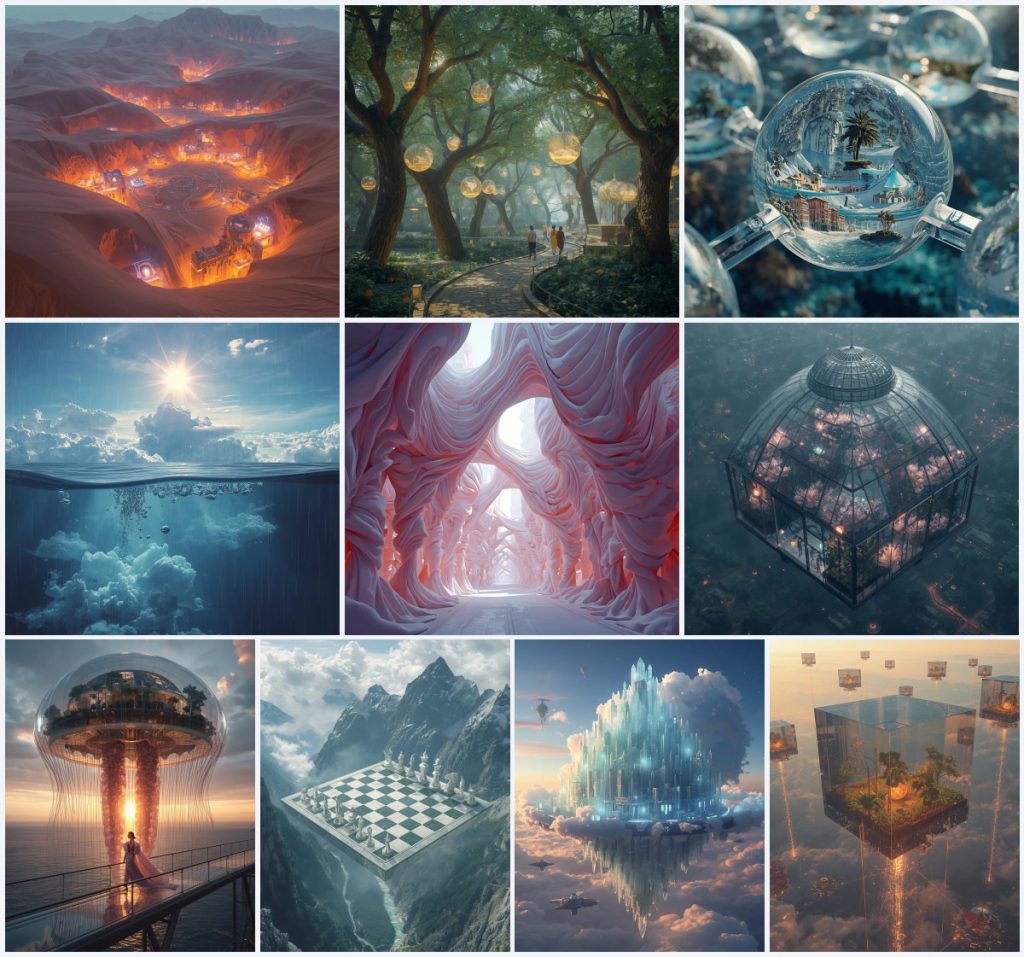
This collection brings together ten wildly different AI image prompts, each designed to create a scene that feels both enchanting and futuristic. The prompts range from a neon desert with buried crystal cities to a celestial orchard where dreams grow as crystal fruits, and from a giant glass marble macro world to a planetary-scale cloud printer. Every prompt shares a love of scale, light, and surreal beauty, but each one asks the model to solve a different visual puzzle.
In this article you will get a clear breakdown of what these prompts contain, why they work, how to run them in popular tools, and what to check when the first result comes back. Whether you are using ChatGPT, Google Gemini, Leonardo AI, or Midjourney, you will find practical guidance for getting the most out of each prompt. The goal is to help you turn these text descriptions into images that feel intentional, polished, and true to the original idea.
What this collection of forest and magical prompts actually contains
The set is a mix of ten standalone prompts, each with its own title and text. They are not variations of one scene; they are separate worlds. Some are explicitly forest-like, such as the floating luxury memory orchard with giant transparent trees, while others use forest elements as part of a larger environment, like the giant floating greenhouse filled with rare alien flowers. The common thread is a sense of enchantment created through scale, transparency, and glowing light.
- A massive desert with neon crystal dust and buried futuristic cities that surface as dunes move.
- An extraordinary celestial orchard where memories grow as luminous crystal fruits on giant transparent trees.
- A macro world inside thousands of giant colorful glass marbles connected by transparent bridges.
- A surreal ocean-sky merge with reverse gravity rain and cloud water currents.
- A living city made of morphing fabric architecture with breathing buildings and elastic streets.
- A city-sized transparent greenhouse floating above Earth with glowing alien flowers and crystal insects.
The shared scene and how the prompts describe it
Across the collection, the prompts build scenes by layering impossible structures with natural forces. In the desert prompt, "entire futuristic cities exist beneath shifting sand waves made of glowing neon crystal dust" and "structures occasionally surface as dunes move like ocean tides." In the ocean-sky prompt, "ocean and sky are merged and gravity is reversed, causing rain to rise upward while clouds flow like underwater currents." The orchard prompt adds "floating pathways weave through luxury gardens, elegant pavilions, and artistic observation platforms." Each clause gives the model a concrete anchor while leaving room for interpretation.
The scale shifts dramatically from prompt to prompt. One asks for a "macro world inside thousands of giant colorful glass marbles," while another describes a "planetary-scale machine suspended among the heavens." The greenhouse prompt is "the size of a city floating above Earth," and the chess prompt stretches a board "across mountain peaks." This variety means you can use the same collection for intimate close-ups or epic wide shots, depending on which prompt you choose and how you frame the composition.
Why these prompts are worth trying
These prompts are worth trying because they push beyond ordinary landscapes and ask for specific, unusual combinations. The desert prompt mixes ancient and advanced, the orchard prompt mixes memory and fruit, and the marble prompt mixes macro and editorial fashion. That tension creates images that feel fresh rather than generic. Another reason is that the prompts include technical cues like "8K ultra detail," "HDR," and "cinematic lighting," which help the model aim for high polish. Finally, the collection covers a wide range of subjects, so you can test different models and see which one handles glass, fabric, water, or crystal best.
- The prompts combine opposing ideas, such as ancient and advanced or memory and fruit, which leads to more original images.
- Technical cues like 8K, HDR, and cinematic lighting give the model clear quality targets.
- The variety of subjects lets you compare how different tools handle glass, fabric, water, and crystal.
Three styles that stay inside this collection
You can lean into three distinct styles without leaving the world of these prompts. Each style uses elements already present in the text, so you are not adding new objects or changing the core idea. The first is ultra-cinematic sci-fi realism, which fits the desert and data cube prompts. The second is surreal luxury fantasy, which suits the orchard and greenhouse prompts. The third is macro editorial surrealism, which matches the glass marble prompt. These three cover the range of the collection while keeping every image grounded in the original descriptions.
- Ultra-cinematic sci-fi realism: Use this for the desert and data cube prompts, where glowing neon crystal dust and transparent cubes demand sharp, high-contrast lighting and a sense of vast scale.
- Surreal luxury fantasy: Use this for the orchard and greenhouse prompts, where floating pathways, elegant pavilions, and luminous crystal fruits call for soft light and premium aesthetics.
- Macro editorial surrealism: Use this for the glass marble prompt, where transparent bridges and miniature landscapes inside marbles need close-up detail and fashion-editorial styling.
How to run these prompts step by step
Running these prompts is straightforward, but a few steps will save you time and frustration. Start by choosing one prompt from the collection and copying its full text exactly as written. Then open your preferred tool and paste the prompt into the text field. If you have a reference photo, upload it now so the model can use it for composition or color. Generate the first image and study it before making changes. Check the hands, the face, and the main object, because those are the areas most likely to need correction. Finally, adjust the prompt or settings and generate again until the result matches the scene you want.
- Copy the prompt. Select one prompt from the collection and copy the entire text, including the technical cues like 8K and HDR.
- Upload a reference. If you have a photo that matches the mood or composition, upload it so the model can use it as a guide.
- Generate the first image. Paste the prompt into your tool and run it with default settings to see what the model produces.
- Check hands. Look closely at any hands in the image, since fingers and joints are common failure points in complex scenes.
- Check face. If a person or figure appears, inspect the face for distortion, asymmetry, or unnatural features.
- Check the main object. Verify that the central object, such as the crystal fruit or glass marble, is clear and correctly formed.
What to look for in a reference photo
A good reference photo can help the model understand lighting, scale, and mood, but it should not fight the prompt. Choose an image that shares the general atmosphere of the scene you want, such as a glowing forest, a glass surface, or a vast sky. Avoid photos with heavy text or watermarks, because those can bleed into the output. The reference should support the prompt, not replace it.
- Pick a photo with lighting that matches the prompt, such as soft glow for the orchard or sharp neon for the desert.
- Choose a composition that leaves room for the main object, like a crystal fruit or a floating marble.
- Avoid images with text, logos, or watermarks that could appear in the final render.
Which tools handle these prompts best
Different tools have different strengths, and these prompts will behave differently depending on where you run them. ChatGPT is good for quick iterations and understanding the prompt, but it may struggle with extreme detail. Google Gemini often handles surreal combinations well. Leonardo AI gives you more control over style and composition. Midjourney tends to produce the most cinematic results, especially for the desert and data cube prompts. The table below compares them on access, typical realism, and what each is useful for with this specific collection.
| Tool | Access | Typical realism | Useful here for |
|---|---|---|---|
| ChatGPT | Free and paid tiers | Moderate | Quickly testing the orchard prompt and refining the description of crystal fruits. |
| Google Gemini | Free and paid tiers | Moderate to high | Handling the surreal ocean-sky merge with reverse gravity rain. |
| Leonardo AI | Free and paid tiers | High | Controlling the macro glass marble prompt and its transparent bridges. |
| Midjourney | Paid subscription | Very high | Producing the cinematic desert with neon crystal dust and buried cities. |
Three tips for better results with these prompts
These tips focus on real materials and objects that appear in the prompts, so you can adjust without breaking the scene. First, when working with the crystal fruits in the orchard prompt, ask for "luminous crystal fruits" with visible internal glow, because that detail makes the dream worlds inside them readable. Second, for the glass marble prompt, emphasize "transparent bridges" and "macro world" so the model understands the scale. Third, for the desert prompt, mention "glowing neon crystal dust" and "shifting sand waves" to keep the buried cities feeling hidden and advanced.
- For the orchard prompt, specify luminous crystal fruits with visible internal glow to make the dream worlds readable.
- For the glass marble prompt, emphasize transparent bridges and macro world to lock in the scale.
- For the desert prompt, mention glowing neon crystal dust and shifting sand waves to keep the buried cities hidden and advanced.
Common issues and how to fix them
These prompts can fail in predictable ways, and knowing what to change saves time. The table below lists four common issues and the specific adjustments that help. Each issue is a real failure this collection can produce, from muddy glass to broken scale.
| Issue | What to change |
|---|---|
| Crystal fruits look like plain glass | Add "luminous internal glow" and "visible dream world inside" to the prompt. |
| Glass marbles lose their miniature landscapes | Increase emphasis on "macro world" and "unique landscape inside each marble." |
| Desert cities are not visible beneath the sand | Specify "translucent sand layers" and "soft glowing energy" from underground cities. |
| Fabric architecture looks like static cloth | Add "continuously morphs" and "breathing buildings" to the prompt. |
Frequently Asked Questions
Can I use these prompts in any AI image generator?
Yes, you can paste them into ChatGPT, Google Gemini, Leonardo AI, Midjourney, or other tools. Results will vary because each model interprets scale, transparency, and lighting differently.
Do I need a reference photo to get good results?
No, a reference photo is optional. It can help with lighting and composition, but the prompts are detailed enough to work on their own. If you do use one, choose an image that matches the mood without adding text or watermarks.
Which prompt in this collection is best for beginners?
The floating luxury memory orchard prompt is a good starting point because it has clear objects like crystal fruits and transparent trees. The desert prompt is also beginner-friendly, but it may require more iterations to get the buried cities right.
Conclusion
This collection of ten prompts offers a wide range of enchanting and futuristic scenes, from neon deserts to celestial orchards and macro glass worlds. Each prompt is built with specific details that guide the model toward a polished result, and the variety lets you experiment with different tools and styles. By following the steps and tips in this article, you can turn these text descriptions into images that feel intentional and visually striking. Whether you are new to AI image generation or looking for fresh ideas, these prompts give you a strong starting point.
Always make sure you have the right to edit any photo you use as a reference before uploading it to an AI tool.