

New 10 AI Prompts for Stylish Modern Women with Premium Fashion Photography in Desert Landscapes
This collection gathers ten AI image prompts built around stylish modern women, premium fashion photography, and desert landscapes. Each prompt shares one visual trick: the woman appears to step out of a torn paper hole, with ripped edges wrapping around her half-body and creating a 3D pop from the surface.
The set moves through many moods and outfits, from a playful pink ruffle skirt to a tailored grey pinstripe suit. The desert setting is implied by the premium fashion photography style and the clean, sunlit presentation, while the torn paper frame gives every portrait a bold editorial feel. Below you will find what the prompts contain, how to run them, and how to fix common problems.
What this collection of modern fashion portraits contains
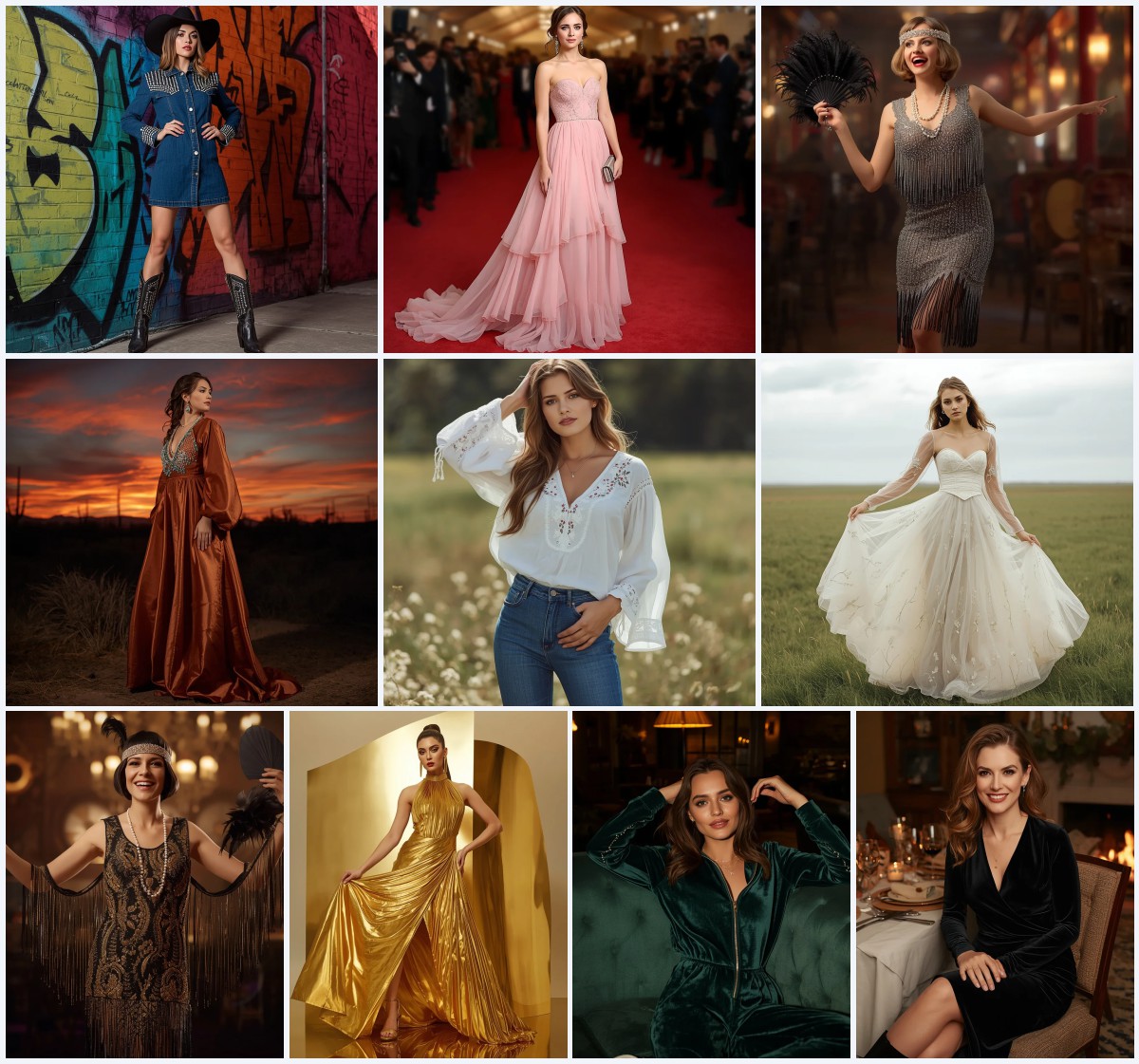
Every prompt in this set describes a beautiful woman with specific hair, eyes, expression, and pose, then places her inside a torn paper hole. The clothing changes from card to card, but the structure stays consistent, so you can swap outfits and moods without losing the signature look. The desert landscape idea lives in the clean, high-end fashion styling rather than in a literal sand dune, which keeps the focus on the woman and the paper tear.
- A torn paper hole with realistic, ripped edges wrapping naturally around her half-body
- A detailed outfit such as a bubblegum pink ruffle mini skirt or a tailored beige blazer
- Specific hair and eye details, for example bouncy shoulder-length blonde hair and bright blue eyes
- A clear expression and gesture, such as a thumbs-up, arms crossed, or a hand on the chin
- A 3D depth effect that makes the woman pop from the surface
- A premium fashion photography finish with clean lighting and sharp clothing detail
The torn paper frame and the desert fashion mood
The scene is built around a single visual device: the woman emerges through a torn paper hole. The prompt says the ripped edges wrap "naturally around her half-body," which means the paper should look like it is physically hugging her silhouette rather than floating in front of her. That phrase is the key to the whole effect, because it tells the model to connect the paper plane to her body.
The fashion side is just as precise. Cards describe a "playful bubblegum pink ruffle mini skirt" with "delicate ruffles along the hemline," or a "sophisticated tailored beige blazer" with "sharp lapels and a single-button closure." The desert landscape context is carried by the premium fashion photography style, which favors warm light, clean backgrounds, and a polished editorial finish. If you want sand or rock in the frame, you can add it, but the base prompt keeps the setting minimal so the outfit and the paper tear stay dominant.
Why this torn-paper fashion look works
This set works because it combines a simple, repeatable frame with endless outfit variation. The torn paper hole gives every image a built-in sense of depth, so the portrait feels like a magazine cover rather than a flat photo. The desert fashion styling adds warmth and confidence, and the specific poses make each card feel like a distinct character rather than a copy of the last one.
- The torn paper edge creates instant 3D depth, which makes the woman stand out from the background
- The outfit details are specific enough to guide the model, from ruffle hems to pinstripe lapels
- The pose and expression change across the set, so you get ten different moods from one shared structure
Three styles inside this prompt set
Three styles run through this collection, and each one stays inside the prompt's own language. You are not asked to leave the torn paper frame or abandon the premium fashion finish. Instead, you lean into the mood that each card already describes.
- Playful editorial: Use the upbeat cards with a thumbs-up gesture and a bubblegum pink or sunny yellow ruffle mini skirt to create a bright, youthful magazine cover.
- Commanding power portrait: Follow the cards with a tailored beige blazer, a grey pinstripe suit, or a cream dress coat, and keep the arms crossed or the gaze direct for a serious fashion statement.
- Quiet introspection: Choose the pensive prompts with a hand on the chin, a soft mustard long cardigan, or a mauve knit top, and let the torn paper frame feel calm and thoughtful.
How to run these prompts step by step
The workflow is simple, but the order matters. Start by choosing one card from the collection, then copy its full prompt text. If you want a specific face or body, upload a reference photo before you generate. After the first result, check the hands, the face, and the main object, which here is the torn paper hole and the outfit. Small edits to the prompt usually fix more than rerolling many times.
- Pick one card. Choose a single prompt from the ten, such as the pink ruffle skirt or the grey pinstripe suit, so you are not mixing outfits.
- Copy the prompt. Copy the full prompt text exactly as written, including the torn paper hole description and the clothing details.
- Upload a reference. If you need a specific face or pose, upload a photo you have the right to edit and let the tool use it as a guide.
- Generate the first image. Run the prompt with your chosen model and aspect ratio, then look at the overall composition before making changes.
- Check hands and face. Inspect the hands for extra fingers or odd joints, and check that the eyes, hair, and expression match the prompt.
- Check the main object. Look closely at the torn paper hole: the ripped edges should wrap naturally around her half-body and the 3D depth should feel real.
What to look for in a reference photo
A reference photo helps the model match a real face, hairstyle, or body shape, but it also affects how well the torn paper effect sits on the body. Choose a photo that is clear, well lit, and close enough to show the face and shoulders. The prompt describes a half-body composition, so a waist-up or chest-up photo usually works better than a full-length shot.
- Use a sharp, front-facing photo with even lighting so the face and hair details stay readable
- Pick a waist-up or chest-up framing that matches the half-body torn paper composition
- Avoid heavy shadows or busy backgrounds that could confuse the model when it builds the paper edge
Which tools handle this prompt best
Different tools interpret the torn paper hole and the fashion details in different ways. ChatGPT and Google Gemini are useful for prompt editing and quick image generation, while Leonardo AI and Midjourney tend to give stronger realism and better fabric detail. The table below compares access, typical realism, and what each tool can do with a real detail from this prompt.
| Tool | Access | Typical realism | Useful here for |
|---|---|---|---|
| ChatGPT | Web and app, paid tiers for image generation | Good for concepts, moderate for fine fabric | Rewriting the prompt so the torn paper hole wraps naturally around her half-body |
| Google Gemini | Web and app, limited free image use | Good for clean lighting and simple scenes | Testing the bubblegum pink ruffle mini skirt and white crop top combination |
| Leonardo AI | Free daily credits, paid plans for more | Strong realism and texture control | Rendering the tailored beige blazer with sharp lapels and a single-button closure |
| Midjourney | Discord and web, subscription required | High realism and editorial polish | Producing the 3D depth that makes the woman pop from the torn paper surface |
Three practical tips for better results
Small prompt changes can make a big difference with this set. The torn paper hole is the hardest part, so give it extra attention. The outfit details are also easy to lose, especially when the model focuses on the face. Use these three tips to keep the image close to the original prompt.
- Keep the torn paper hole description in every version, because removing the ripped edges or the 3D depth turns the image into a plain portrait
- Name the exact garment when you edit, such as the cream-colored tailored dress coat or the mustard yellow long cardigan, so the model does not invent a generic outfit
- Match the pose to the mood, using a thumbs-up for the upbeat cards and a hand on the chin for the pensive ones
Common issues and what to change
Most failures with this collection come from the paper edge, the hands, or the outfit. The torn paper hole can look flat, the fingers can merge during a thumbs-up or a hand-on-chin pose, and the clothing can drift away from the prompt. The table below lists the four most likely problems and the exact change that helps.
| Issue | What to change |
|---|---|
| The torn paper edge looks flat and does not wrap around the body | Add or repeat the phrase about ripped edges wrapping naturally around her half-body and ask for a 3D depth effect |
| The hands look wrong during a thumbs-up or a hand-on-chin pose | Simplify the gesture in the prompt, or generate again and pick a result where the fingers are clearly separated |
| The outfit loses its specific detail, such as the ruffle hemline or the pinstripe lapels | Name the garment and its key feature again in the prompt, for example the light grey pinstripe suit jacket with peaked lapels |
| The face does not match the described hair and eyes | Restate the hair and eye details, such as sleek dark brown hair in a sharp modern ponytail and intense thoughtful dark eyes |
Frequently Asked Questions
Can I use these prompts without the torn paper hole?
Yes, but the torn paper hole is the signature effect of this collection. If you remove it, the image becomes a standard fashion portrait and you lose the 3D depth that makes the woman pop from the surface. If you want a plain portrait, it is better to start from a different prompt.
Which card is best for a serious or powerful mood?
The cards with a tailored beige blazer, a light grey pinstripe suit jacket, or a cream-colored dress coat work best for a serious mood. Keep the arms crossed or the gaze direct, and the torn paper frame will make the portrait feel commanding rather than casual.
Do I need a reference photo for these prompts?
No, you can run any card as a text-only prompt. A reference photo helps when you want a specific face, hairstyle, or body shape. If you upload one, choose a sharp, waist-up photo with even lighting and make sure you have the right to edit it.
Conclusion
This collection gives you ten ways to build a stylish modern woman portrait with premium fashion styling and a torn paper frame. The shared structure keeps the results consistent, while the outfit and mood changes keep each card fresh. Start with one prompt, copy it fully, and check the hands, the face, and the torn paper edge after every generation. With a few small edits, you can get a polished editorial image that feels like it belongs on a magazine cover.
Edit only photos you have the right to edit, and respect the people and places in your references.