

Best 10 AI Prompts for Women’s Comprehensive Image Prompt Libraries
This collection gathers ten distinct AI image prompts that together form a comprehensive portrait library for women. Each prompt targets a different mood, era, and wardrobe, so you can generate everything from a graffiti-wall editorial to a fireplace-lit dinner party. The shared thread is a focus on fabric texture, pose, and lighting that reads as photorealistic rather than plastic. If you have ever wanted a single reference page for building a varied portfolio of female portraits, this set is built for exactly that.
The prompts range across western chic, roaring-twenties glamour, Hollywood red-carpet elegance, and modern lounge luxury. You will find structured denim with rhinestones, pale pink chiffon, beaded flapper fringe, silk prairie silhouettes, embroidered tulle, metallic gold drapery, velour tracksuits, and velvet wrap dresses. Because each card names a specific garment construction, accessory, and environment, the collection works as a wardrobe study as much as a prompt list. The article below explains what the set contains, how to run it, and where AI generators typically fail.
What this comprehensive women's prompt library contains
The set is a catalogue of ten separate portrait prompts, each built around one outfit and one setting. Some cards lean western, others lean glam, and a few sit in contemporary casual luxury. Every prompt specifies fabric behaviour, accessory type, and camera or lighting language so the model has enough constraints to avoid generic output. The collection is not a single scene but a rotating wardrobe you can pull from depending on the portrait you need.
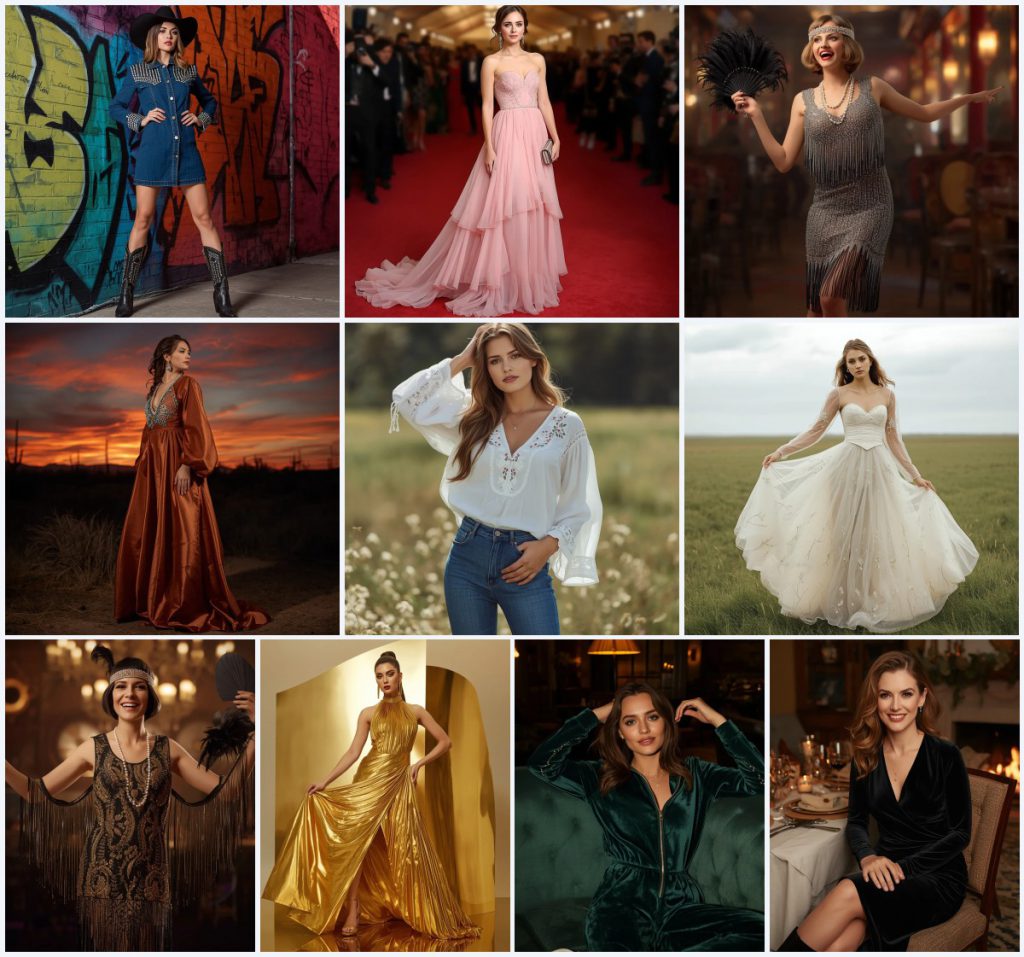
- A structured denim western dress with geometric rhinestone and silver studwork on shoulders and cuffs, worn against a graffiti-covered brick wall.
- A pale pink chiffon gown with sweetheart neckline, bodice ruching, multi-layered skirt, and a subtle train on a blurred red carpet.
- A knee-length flapper dress covered in silver and black beadwork with swaying fringe, a sparkling headband, and long pearl necklaces.
- A floor-length silk western dress in burnt orange and deep rose with pearl and turquoise beadwork on the bodice, posed on a windswept mesa at sunset.
- A white peasant blouse with embroidery and bell sleeves paired with high-waisted flared blue denim jeans and brown leather ankle boots.
- A layered ivory tulle western dress with wildflower and equestrian embroidery, fitted corset bodice, and sheer long-sleeved overlay in an open prairie field.
The shared scene across these portrait prompts
Each card drops the subject into a fully described environment rather than a blank studio. One prompt places her "against a vibrant, graffiti-covered brick wall" with "harsh shadows and bright highlights" that emphasise denim texture. Another sets her "on a windswept mesa at sunset" where the sky is "a canvas of fiery reds, purples, and blues." A third moves indoors to a "blurred, opulent speakeasy setting with warm, antique lighting" where the fringe of a flapper dress is meant to be caught mid-motion.
The collection also covers quieter interiors. The velour tracksuit card sits in a "plush, dimly lit high-end lounge" with "soft, ambient lighting," while the velvet wrap dress prompt places its subject at "a cozy winter dinner party by a crackling fireplace." Across all ten, the scene is doing the same job: it justifies the wardrobe and gives the generator a light source to imitate. You are not just prompting a dress; you are prompting the room or landscape that makes the dress believable.
Why this set works for building a portrait library
The value here is variety without chaos. Because each prompt locks one outfit to one environment, you can generate a consistent portfolio rather than a pile of random images. The specificity also trains you as a prompter: you start noticing how "bodice ruching" or "dropped waist" changes the silhouette the model produces.
- It covers multiple eras and dress codes, so a single reference page can supply editorial, red-carpet, vintage, and casual-luxury portraits.
- Every card names real garment construction details, which reduces the chance of the AI inventing an impossible dress shape.
- The lighting language is explicit in each prompt, so you can compare how harsh urban light, diffused overcast light, and warm fireplace light change the same subject.
Three styles you can pull from this collection
Three style directions stand out when you read across the ten cards. Each one stays inside the collection as written, so you are not inventing a new genre, only choosing which card to run first.
- Urban Editorial: The denim and rhinestone card uses harsh shadows and bright highlights against graffiti brick, giving a fashion-magazine edge rather than a soft portrait.
- Vintage Glamour: The flapper prompts rely on beadwork, fringe, a sparkling headband, and a speakeasy background to recreate roaring-twenties opulence.
- Soft Natural Elegance: The prairie and peasant-blouse cards use diffused overcast light, flowing tulle or cotton, and open fields for a romantic, grounded look.
How to run these prompts step by step
The workflow is the same whether you are generating the red-carpet gown or the velour tracksuit. Start with one card, not all ten, and treat the first output as a draft rather than a final image. Small adjustments to pose or camera distance usually matter more than rewriting the whole prompt.
- Copy the prompt. Select the full text of one card, including the lighting and background clauses, and paste it into your generator without trimming the descriptive tail.
- Upload a reference. If your tool supports image reference, upload a clear photo of a person or a garment so the model has a real silhouette to anchor the dress shape.
- Generate the first pass. Run the prompt at your chosen aspect ratio, keeping the full-body framing that most cards request so the hemline and footwear are visible.
- Check hands and face. Zoom in on fingers, jewellery, and facial features; AI often fuses rings into skin or softens eyes when the prompt is dense.
- Check the main object. Inspect the garment itself: beadwork should read as separate beads, fringe should hang in strands, and tulle should stay translucent rather than turning opaque.
- Refine and re-run. Adjust one clause at a time, such as swapping harsh shadows for diffused light, and regenerate until the fabric and pose match the card's intent.
Choosing a reference photo for these prompts
A good reference photo does most of the heavy lifting before the prompt even runs. Because these cards describe full-body outfits, the reference should show the subject from head to toe or at least from shoulders to shoes. If you only have a face shot, the generator will guess at proportions and may produce a mismatched silhouette.
- Use even, neutral lighting so the generator can read skin tone and hair colour without fighting coloured shadows.
- Avoid heavy filters or beauty smoothing, which can make the AI reproduce a plastic texture on the final portrait.
- Keep the background simple in the reference so the model does not blend your original room into the speakeasy or prairie scene.
Which tools handle this collection best
Different generators respond differently to long, costume-heavy prompts. The table below compares four common options against the needs of this set, especially the detailed fabric and lighting clauses.
| Tool | Access | Typical realism | Useful here for |
|---|---|---|---|
| ChatGPT | Web and mobile, paid tiers for image generation | Moderate to high with good prompting | Rewriting the denim rhinestone card into a shorter prompt while keeping the graffiti brick wall and harsh shadows. |
| Google Gemini | Web and mobile, free and paid tiers | Moderate, improving quickly | Describing the pale pink chiffon gown's sweetheart neckline and multi-layered skirt in plain language before generating. |
| Leonardo AI | Web app, free credits with paid plans | High for fashion and editorial looks | Rendering the beaded flapper fringe and speakeasy lighting with strong texture control. |
| Midjourney | Discord and web, subscription required | Very high, especially for fabric and light | Capturing the metallic gold gown's architectural drapery and reflective studio highlights. |
Three practical tips for better results
These tips come directly from the materials named in the cards, so they apply whether you are running the tulle prairie dress or the velvet wrap dress.
- When prompting beadwork, add a word like 'individual beads catch light' so the generator does not render the flapper dress as a flat glitter texture.
- For the tulle and chiffon cards, specify 'translucent fabric' or the AI may turn the skirt opaque and lose the dreamy silhouette.
- For the velvet wrap dress by the fireplace, mention 'warm ambient glow on fabric' so the deep burgundy or forest green does not read as flat black.
Common issues and what to change
Even strong prompts fail in predictable ways. The table below lists failures this specific collection can produce and the single change that usually fixes each one.
| Issue | What to change |
|---|---|
| Rhinestones on the denim dress merge into a solid silver patch | Add 'distinct geometric rhinestone clusters' and reduce the number of accessory clauses in the prompt. |
| Flapper fringe looks like a static skirt rather than moving strands | Include 'mid-motion fringe sway' and lower the emphasis on the background speakeasy details. |
| Tulle prairie dress becomes an opaque white gown | Add 'sheer layered tulle, visible transparency' and specify diffused overcast light again. |
| Velvet wrap dress loses its jewel tone in the fireplace scene | Specify 'deep burgundy velvet with warm rim light' and remove competing warm-colour words from the background. |
Frequently Asked Questions
Can I run all ten prompts as one image?
No. Each card describes a different person, outfit, and location, so combining them will produce a confused collage. Run them one at a time and treat the set as a library you pull from, not a single scene.
Which card is easiest for a beginner?
The white peasant blouse and flared jeans prompt is the simplest because the outfit is familiar and the sun-drenched field setting needs less precise lighting control than the metallic gold gown or the beaded flapper dress.
Do I need a reference photo for every prompt?
It helps but is not mandatory. Text-only generation works for the red-carpet and prairie cards, while the velvet wrap dress and velour tracksuit benefit most from a reference because fit and posture carry the casual-luxury mood.
Conclusion
This collection is less about one perfect image and more about range. By moving through denim rhinestones, chiffon, flapper beadwork, silk, tulle, metallic drapery, velour, and velvet, you build a portrait library that covers editorial, vintage, and intimate moods. Pick one card, run it cleanly, check the hands and the main garment, then move to the next. Over ten generations you will have a wardrobe study that looks intentional rather than random.
Only edit and generate from photos you have the right to edit, and credit or get consent from anyone whose face appears in your final portraits.